
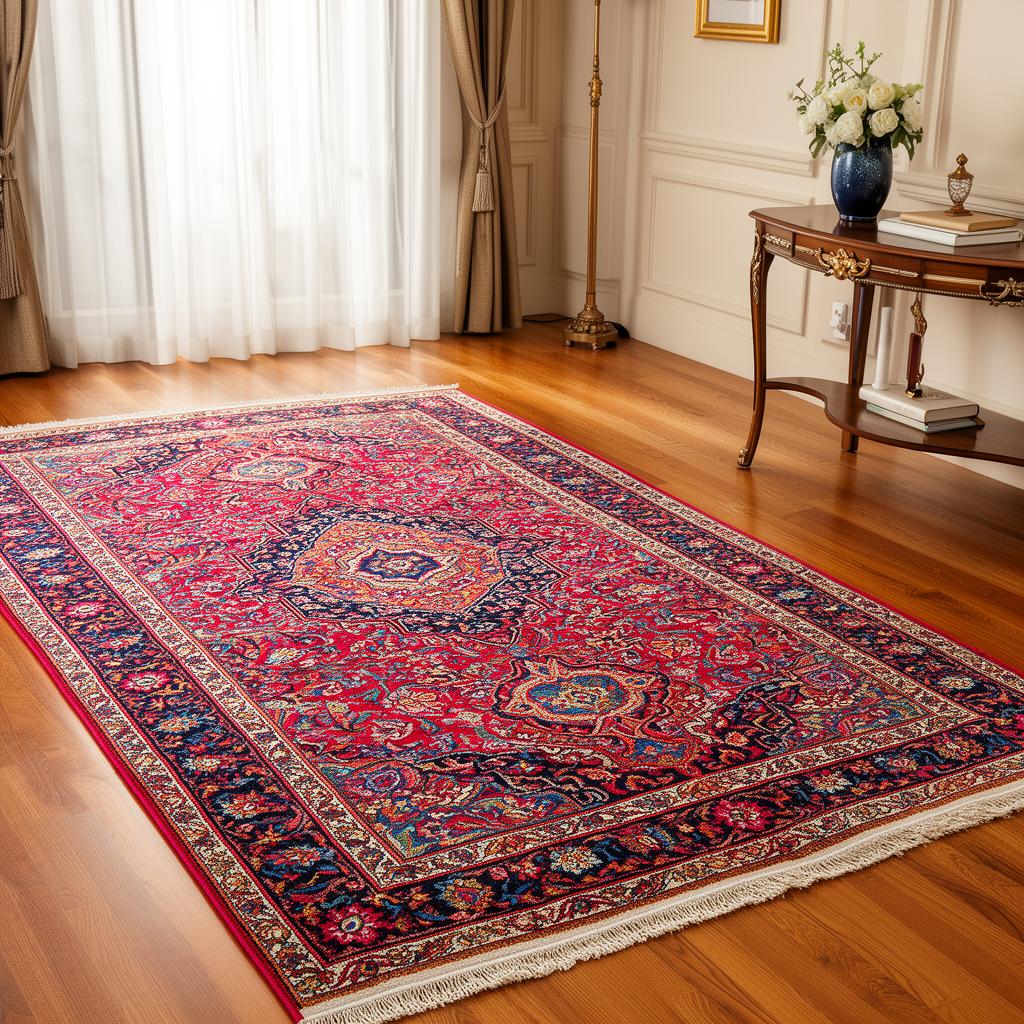
A rug almost never fails in the middle. It fails at the edges, where the fringe greys and knots, the selvedge frays, and on machine made pieces the latex backing dries out and starts to crumble.
Those areas need different handling from the pile, and a great deal of the damage we see was caused by well meaning cleaning rather than by wear.
What a fringe actually is
On a hand knotted rug, the fringe is not decoration. It is the warp, the structural threads the entire rug is knotted onto, extending beyond the pile. Damage the fringe badly enough and you are damaging the foundation of the rug itself.
On many machine made rugs the fringe is sewn on afterwards purely for looks. It carries no structural role, which means it can be replaced easily, but it also means it is often made of cotton that greys quickly and knots at the first sign of a brush.
- Hand knotted: fringe is the warp, structural, must not be cut.
- Machine made: fringe is usually stitched on and can be replaced.
- Cotton fringes discolour faster than the wool pile beside them.
- Knotted and matted fringes are usually the result of a stiff brush.
Why fringes go grey and yellow
Fringes are pale cotton lying flat on the floor at the entrance to a room, so they collect foot soil directly. That is the grey. The yellowing is different: it is often cellulosic browning, where moisture draws natural sugars out of the cotton fibre to the surface where they oxidise.
Browning is why a rug that was washed carelessly at home comes back with a yellow tide line on the fringe. It is a moisture management problem, not a dirt problem, and it is treatable but easier to avoid.
Cleaning fringes safely
Fringes are worked by hand, along their length rather than across, and rinsed thoroughly so nothing is left in the fibre to oxidise. Fast, controlled drying is the key step, because slow drying is what causes browning in the first place.
At home, the safe approach is limited but useful. Comb the fringe straight with your fingers or a wide toothed comb, vacuum along its length using the upholstery tool with the brush bar switched off, and stop there.
- Never run a vacuum beater bar over a fringe, it tears and pulls warp threads.
- Comb along the length, never across, and never with a stiff brush.
- Do not use bleach based products, they weaken cotton fast.
- Dry quickly if a fringe gets wet, to avoid browning.
Selvedges and edge fraying
The selvedge is the finished side edge of the rug, usually wrapped or overcast with yarn. It takes the impact of vacuum cleaners, chair legs and doors, and once the wrapping breaks the pile beside it begins to unravel steadily.
A broken selvedge is a genuine urgency, not a cosmetic issue. Reovercasting a short section early is a small job, while leaving it until half a metre has unravelled means a much larger repair and lost pile that cannot be replaced.
Backings, latex and non slip underlay
Machine made and tufted rugs are usually held together with latex adhesive. Latex has a finite life. It dries, hardens and eventually crumbles, and the first sign is a fine sandy powder appearing on the floor underneath the rug.
Once the latex has gone, the rug is shedding structure rather than fibre, and cleaning will not stop it. Cheap non slip underlays can accelerate the problem too, since some contain plasticisers that react with rug backings and with floor finishes, sometimes marking a wooden floor permanently.
- Sandy powder under a rug means the latex backing is breaking down.
- Choose a quality felt and rubber underlay rather than the thin waffle type.
- Check underneath rugs on wood floors periodically for staining.
- Rotate rugs twice a year so wear and light exposure spread evenly.
What can be repaired
A surprising amount. Fringes can be secured, reduced or replaced. Selvedges can be reovercast. Small holes and moth damage can be rewoven on hand knotted pieces by a specialist. Curling corners can often be blocked back flat during washing.
What cannot be repaired is missing pile from wear or dye loss from sunlight and bleach. For those, honest advice is worth more than an optimistic quote, and we will tell you when a repair is not economic against the value of the rug.