
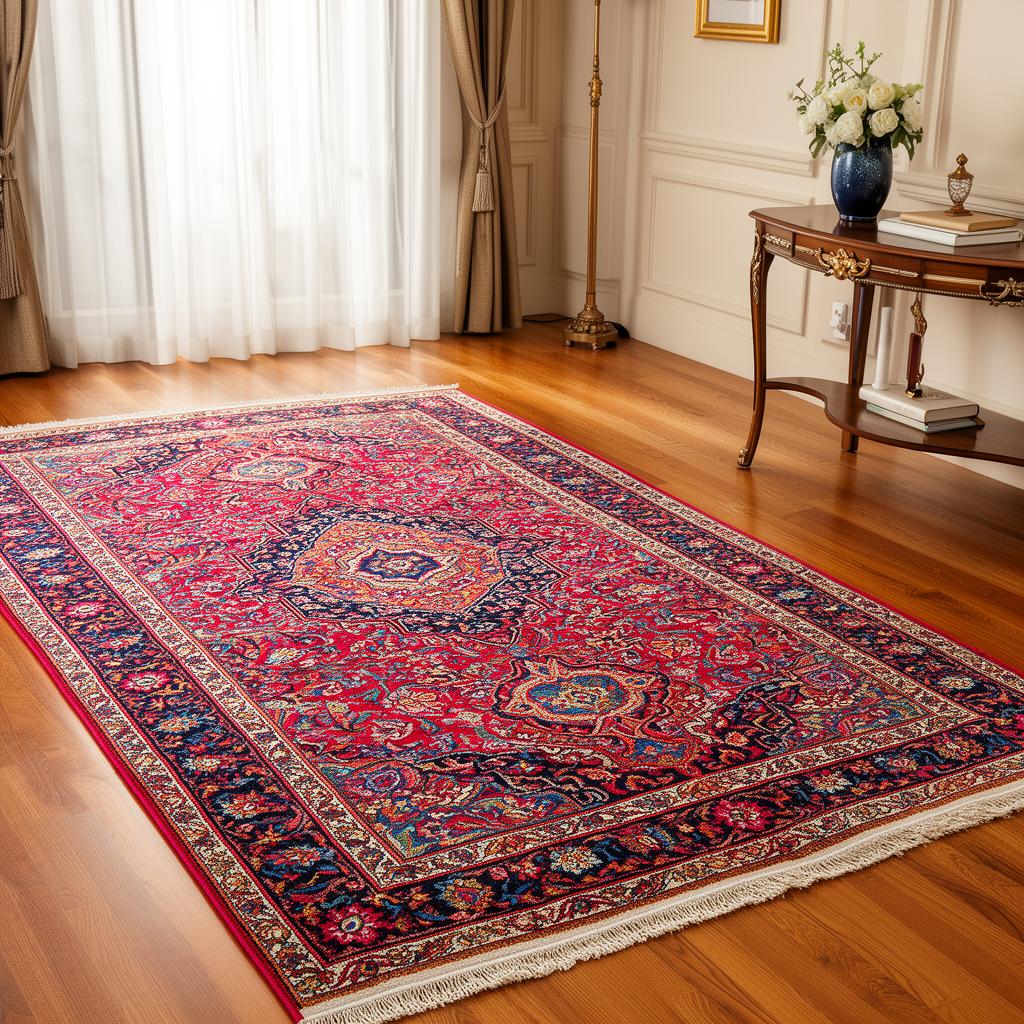
Construction is the first thing a rug specialist looks at, and the back of a rug reveals it immediately.
It determines whether a rug can be washed conventionally, whether the backing will tolerate moisture, and how it must be dried.
How to identify construction
A quick inspection of the reverse and the edges is usually conclusive.
- Hand-knotted — the pattern is visible on the back, with slight irregularity and knots you can see
- Hand-tufted — the back is covered with a cloth or scrim, glued to a latex layer
- Flatweave and kilim — no pile, pattern identical or mirrored on both faces
- Machine-made — uniform, mechanical backing and perfectly regular pattern repeat
Why hand-tufted rugs need care
Hand-tufted rugs rely on a latex adhesive layer to hold the tufts. Over-wetting can break that adhesive down, causing delamination and a distinct odour that no amount of deodorising will fully remove.
These rugs are best cleaned with controlled moisture and dried quickly and flat.
Handmade rugs and dye behaviour
Older handmade rugs may carry dyes that move when wet, so colourfast testing before washing is not optional. Fringes are structural on hand-knotted rugs, being extensions of the foundation, so they need careful handling rather than aggressive brushing.