
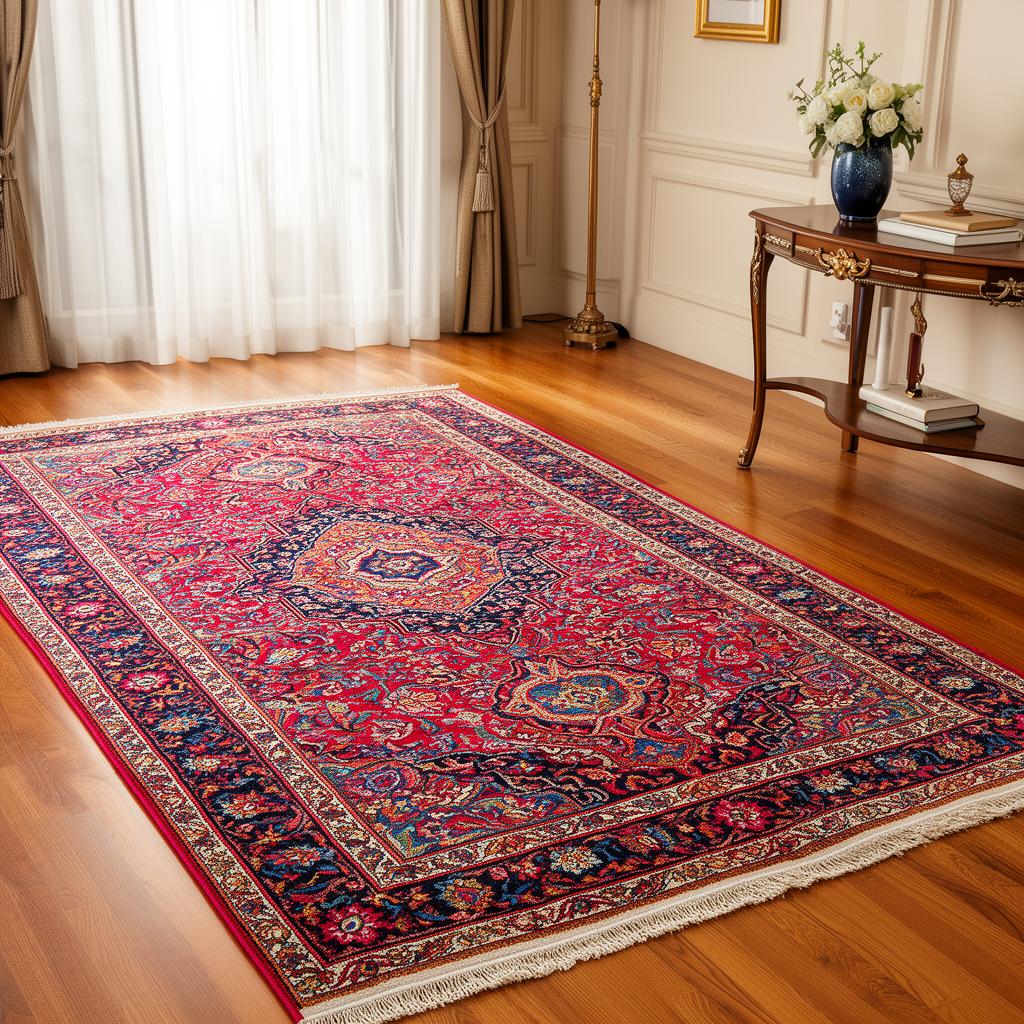
A rug on the floor can only ever be surface cleaned. A rug cleaned properly is handled as a textile: dusted, tested, washed, rinsed and dried under control.
Here is what each stage does and why the order cannot be changed.
Dusting comes first
Dry particulate soil settles deep into the foundation of a pile rug, where vacuuming cannot reach it. Dusting removes it mechanically before any water is introduced.
Introducing water first turns that dry grit into mud within the foundation, which is exactly what the process is designed to avoid.
Testing and washing
Dyes are tested for colourfastness and the fibre is identified so the wash chemistry and water temperature suit the piece. Wool, silk, cotton and viscose all behave differently.
Washing is gentle and methodical rather than aggressive, working with the pile direction and paying attention to fringes and selvedges, which are the most vulnerable parts of a rug.
Rinse and controlled drying
Thorough rinsing removes both soil and residual cleaning solution. Drying is then controlled with airflow, ideally flat, so the rug keeps its shape and no moisture sits in the foundation.
Slow or uncontrolled drying is how odour, dye migration and distortion occur, so this stage is monitored rather than left to chance.