
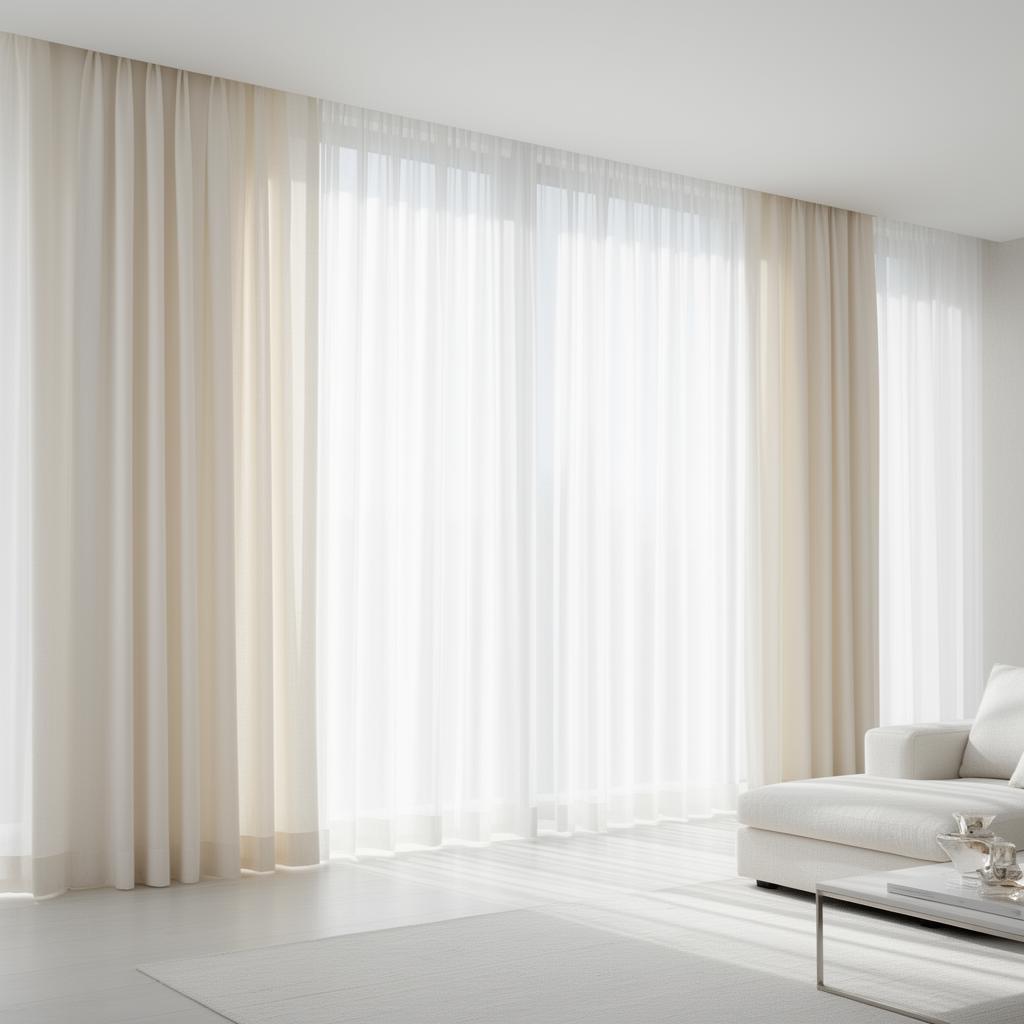
Every soft surface in a room acts as a filter, collecting airborne dust, cooking residue and odour until something removes it.
That is useful while the material stays trapped, and less useful once the textile is saturated and starts releasing it back.
Where dust settles
Curtains and blinds catch airborne particles continuously, particularly near roads, kitchens and open windows. Because the change is gradual, it goes unnoticed until a cleaned panel is compared with an untouched one.
Carpet holds the heaviest load simply because everything eventually falls onto it.
Humidity and ventilation
Damp conditions encourage dust mites and musty odours in textiles. Regular ventilation, extractor use during cooking and showering, and keeping furniture slightly away from cold external walls all reduce that risk.
Where textiles are repeatedly musty, the underlying humidity problem needs solving alongside the cleaning.
A sensible routine
A short, consistent routine does most of the work.
- Vacuum high-traffic carpet more frequently than the rest of the floor
- Vacuum upholstery, including under and behind cushions
- Include curtains and blinds in seasonal cleaning rather than ignoring them
- Ventilate daily, and always after cooking and bathing
- Deal with spills promptly so they do not become odour sources