
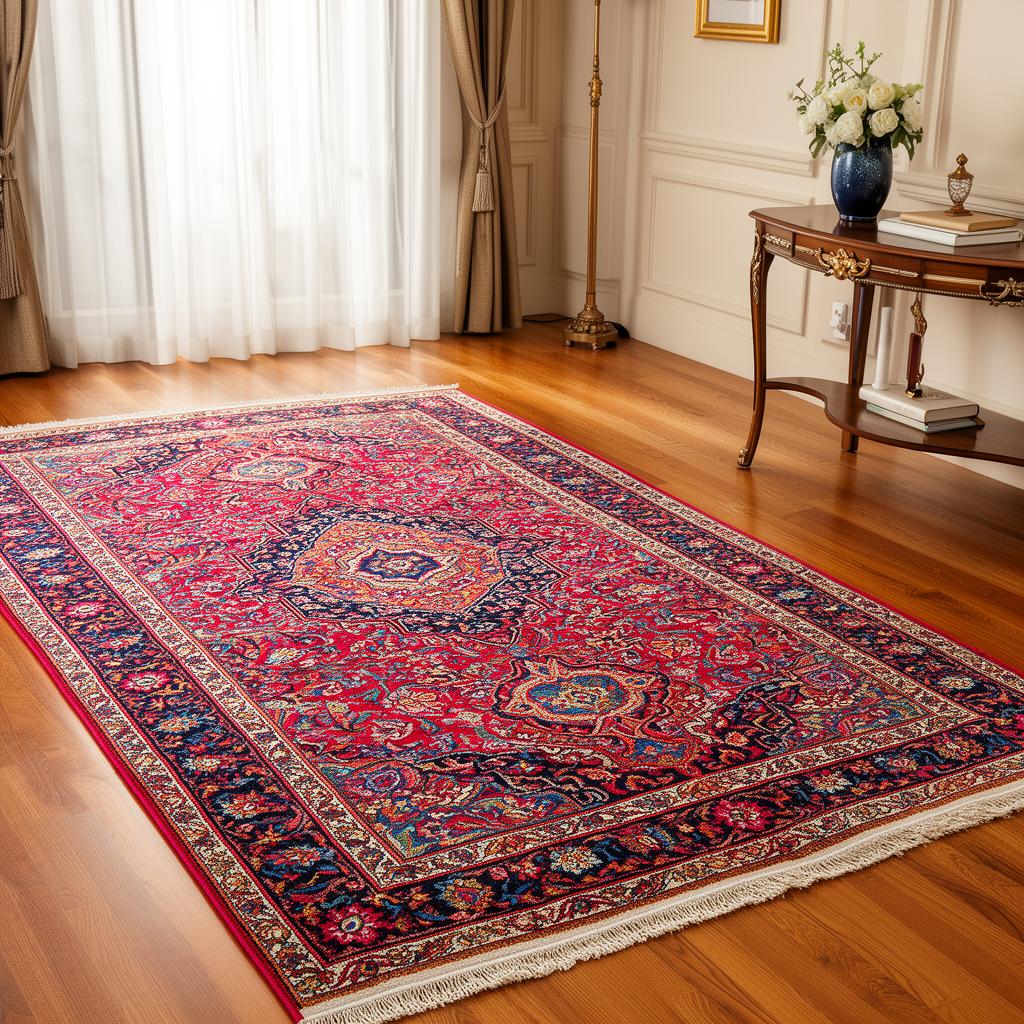
A pale band across a carpet in front of a south facing window is one of the few carpet problems cleaning cannot help with. The colour has gone from inside the fibre, and there is nothing in the pile to remove.
It is worth understanding the difference, because people frequently book a clean expecting a faded area to come back, and the honest answer is that it will not.
How to tell fading from soiling
The two look different once you know what to look for. Soiling makes carpet darker and duller, and it follows traffic patterns, so it appears in lanes and around chairs. Fading makes carpet lighter, and it follows the light, so it appears in geometric shapes that match the window and the furniture.
The simplest test is to look under something. Lift a rug or move a piece of furniture that has been in place for years. If the carpet underneath is noticeably richer in colour than the exposed area, that is fading rather than dirt.
- Fading is lighter, soiling is darker.
- Fading follows the light, in bands and hard edged shapes.
- Soiling follows the feet, in lanes and around seating.
- Colour under long standing furniture reveals the original shade.
Why some carpets fade faster
Ultraviolet light breaks down dye molecules, and how quickly that happens depends on the fibre and on how the colour was applied. Solution dyed fibres, where the colour is added to the material before it is spun, are the most resistant because the colour goes right through the fibre.
Piece dyed and printed carpets have colour applied at the surface and fade sooner. Natural fibres such as wool and silk are generally more susceptible than solution dyed synthetics, and strong colours, particularly reds and blues, show the loss more visibly than neutral tones.
- Solution dyed synthetics resist fading best.
- Wool and silk are more susceptible to ultraviolet damage.
- Strong reds and blues show loss earlier than beiges and greys.
- Printed and surface dyed carpets fade fastest of all.
Rugs fade differently, and it matters more
A rug in a sunny room fades unevenly if it is never moved, which is a much bigger problem than on a fitted carpet because the rug will eventually be moved and the difference becomes obvious in the middle of a room.
Rotating a rug through one hundred and eighty degrees twice a year spreads both light exposure and foot traffic. It takes two minutes and it makes a substantial difference over the life of a good rug.
What can and cannot be done
Recolouring is possible on some rugs, carried out by a specialist restorer, and it is a genuine craft rather than a routine service. It is worth considering on a valuable hand knotted piece and rarely economic on a fitted carpet.
On a fitted carpet the practical options are a rug placed over the faded area, rearranging the room so the faded band is less prominent, or replacement. Cleaning still has value on a faded carpet, because it removes soil and evens out the appearance, but it will not bring the colour back.
- Cleaning removes soil but cannot restore lost dye.
- Specialist recolouring is possible on some rugs, rarely on fitted carpet.
- A rug over the faded band is the usual practical answer.
- Rearranging furniture can make the difference far less obvious.
Slowing it down
Fading cannot be stopped entirely in a room with windows, but it can be slowed considerably, and the measures are all things that make the room more comfortable anyway.
Window film is the single most effective intervention. Modern films block the large majority of ultraviolet light while remaining almost invisible, and they protect furniture and artwork at the same time.
- Fit ultraviolet filtering window film on the sunniest windows.
- Use blinds or voiles during the brightest part of the day.
- Rotate rugs twice a year, and move furniture occasionally.
- Choose solution dyed fibre for very sunny rooms when replacing.
- Close curtains in rooms that are unused during the day.
Other causes of colour loss
Not every pale patch is sunlight. Bleach spots from cleaning products, benzoyl peroxide from acne treatments transferring from bedding or towels, and some medical creams all remove dye permanently and produce a pale mark with a hard edge.
These are irreversible in the same way, but they can sometimes be spot dyed by a specialist since the surrounding carpet still holds its original colour. It is worth identifying the cause, because a recurring source will keep producing new marks.